Marin County Dog Registration Information
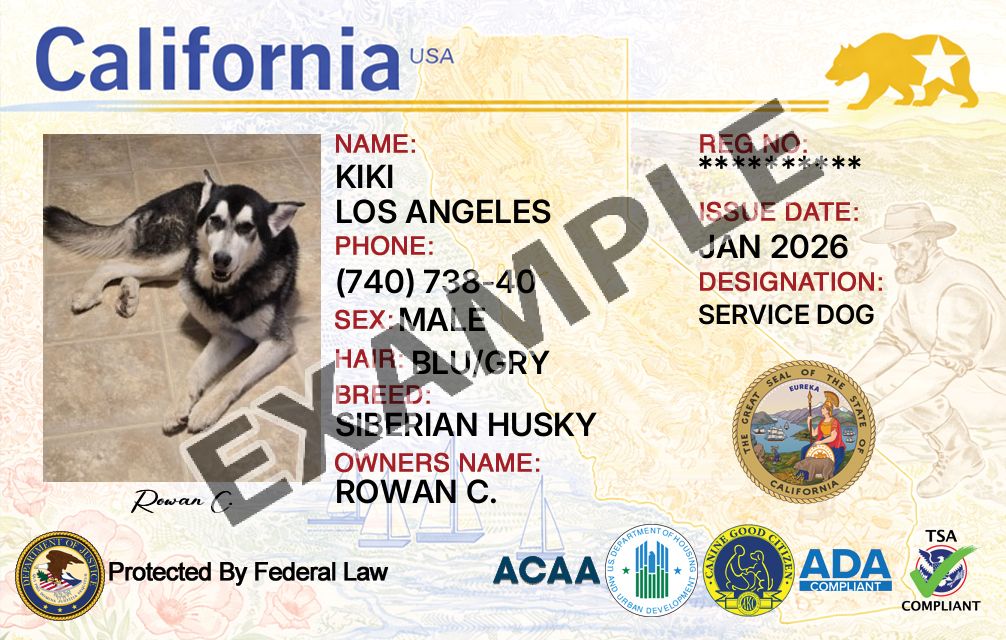
Service Dogs and Emotional Support Animals in Marin, California
If you’re asking, “where do I register my dog in Marin County, California for my service dog or emotional support dog,” the key point is that most residents are looking for a dog license in Marin County, California (sometimes called pet licensing), not a special “service dog registry.” In Marin County, dog licensing is handled through the countywide animal services provider, and licensing typically requires proof of current rabies vaccination.
Where to Register or License Your Dog in Marin County, California
The following office is identified as the official dog licensing agency serving Marin County residents for countywide animal services and licensing. If you live in an incorporated city or town within Marin County, licensing is commonly coordinated through the same provider under local ordinances; if you have a location-specific question, call ahead to confirm your jurisdiction’s requirements and any in-person processing details.
Marin Humane (Dog Licensing / Animal Services for Marin County)
Overview of Dog Licensing in Marin County, California
What “registering a dog” usually means locally
In Marin County, “registering” a dog generally means obtaining or renewing a dog license for a dog that lives in the county. A dog license is a local requirement tied to public health (especially rabies control) and identification. When licensed, your dog typically receives a tag that should be attached to the collar.
Who must get a license
In general, Marin County requires licensing for dogs that live in the county and are above the minimum age threshold set by ordinance (commonly four months). Because Marin County includes multiple incorporated cities and towns plus unincorporated areas, details can vary slightly by jurisdiction; however, licensing is widely required countywide.
- New residents moving into Marin County with a dog should plan to license promptly.
- Puppies typically need licensing once they reach the county’s licensing age threshold.
- Adult dogs should maintain an active license and renew before expiration.
Does a service dog or emotional support dog still need a county license?
In most cases, yes. Service dog status and emotional support animal status relate to specific legal protections (public access for service dogs; housing-related rights for ESAs), but they generally do not replace the requirement to maintain a local dog license and comply with public health rules like rabies vaccination.
What You Need Before Registering a Dog
Common documents and information requested
When you apply for a dog license in Marin County, California, you’re typically asked for details that confirm the dog’s identity and vaccination status. Requirements can vary depending on whether your dog is altered (spayed/neutered), whether you qualify for any reduced fees, and your city/town rules.
- Proof of current rabies vaccination (rabies certificate from your veterinarian).
- Your contact information (name, address, phone).
- Spay/neuter documentation (if applicable, to qualify for altered-dog fee rates).
- Dog details such as breed/mix, color, age, and sex (commonly requested).
- Payment for the licensing fee (fees vary by term and alteration status).
Notes for service dogs and emotional support dogs
Some local licensing programs may offer a service-animal rate or category for the license, but this is separate from “certification.” If you believe your dog qualifies for a service dog category on the license, contact the licensing office to ask what documentation (if any) is required for that fee category.
Steps to Register or License a Dog in Marin County, California
Step-by-step checklist
-
Confirm where you should license based on your address.
Marin County includes incorporated cities/towns and unincorporated areas. Many jurisdictions use the same countywide animal services provider for licensing, but you should confirm any city-specific rules by phone if you’re unsure.
-
Make sure your dog has a current rabies vaccination.
Licensing commonly requires a valid rabies certificate. Check your certificate dates so the vaccination is current at the time you apply.
-
Gather supporting documents.
If your dog is spayed or neutered, have documentation ready. If you are applying under a special fee category (when offered), ask the office what they require.
-
Submit your application and pay the fee.
Licensing may be available by mail or in person during posted customer service hours. Ask about processing times if you need the license quickly.
-
Attach the license tag to your dog’s collar.
A visible tag can help reunite you with your dog faster if they’re found.
If you live in a specific Marin city or town
Some cities and towns publish their own animal-control pages and reference the countywide animal services provider for licensing. If you’ve searched “where to register a dog in Marin County, California” and you’re inside a city like San Rafael, Novato, San Anselmo, Mill Valley, Sausalito, or others, it’s still common to be directed to the same licensing office—while local ordinances may add rules about leashes, noise, animal limits, and business permits.
Service Dog Laws in Marin County, California
What makes a dog a “service dog” (not a license tag)
A service dog is generally a dog that is individually trained to do work or perform tasks for a person with a disability. The legal status comes from the dog’s trained tasks and the handler’s disability-related need—not from buying an ID card, vest, certificate, or online “registration.”
- Public access: Service dogs are generally allowed to accompany their handler in public places where pets are not allowed, subject to applicable law and behavior expectations.
- Training: The key is training to perform specific tasks related to a disability.
- Local licensing: Even if your dog is a service dog, you typically still maintain a local dog license in Marin County, California and keep rabies vaccination current.
Service dog status vs. Marin County dog licensing
Local licensing is a county/municipal requirement for resident dogs. Service dog status is a legal classification that affects access rights and accommodations in certain settings. They overlap because the same dog can be both a service dog and a locally licensed dog—but the license is not what “creates” service dog status.
Emotional Support Animal Rules in Marin County, California
What an emotional support animal (ESA) is
An emotional support animal provides comfort or support that helps with a disability-related condition, and the primary protections for ESAs are typically tied to housing situations (reasonable accommodations), not general public access. ESAs are not the same as service dogs in public places.
How ESA status relates to dog licensing in Marin County
ESA status usually does not replace dog licensing requirements Marin County, California. If your ESA is a dog living in Marin County, you generally still obtain and renew the local dog license and maintain rabies vaccination according to local rules.
Dog License vs. Service Dog vs. Emotional Support Animal (ESA)
People often search for “service dog registration” or “emotional support dog registration” when what they actually need is either (1) a local dog license, (2) documentation for housing accommodations, or (3) clarity about public access rules. This comparison table summarizes the differences.
| Category | What it is | Who issues it / how it’s established | Typical purpose | What you may need in Marin County |
|---|---|---|---|---|
| Dog License | Local license for dogs living in the county/city (sometimes called “registration”). | Issued by the local licensing agency (animal services) for your jurisdiction. | Compliance with local law, rabies control, and identification if your dog is lost. | Proof of rabies vaccination; owner contact info; spay/neuter documentation if applicable; fee payment. |
| Service Dog | A dog individually trained to do work or perform tasks for a person with a disability. | Established by the dog’s training and the handler’s disability-related need (not a universal registry). | Public access rights and accommodations in settings where pets aren’t allowed, when applicable. | Still commonly needs a local dog license and current rabies vaccination; maintain appropriate behavior and control. |
| Emotional Support Animal (ESA) | An animal that provides emotional support related to a disability (commonly a housing-related accommodation concept). | Typically supported by clinical documentation for housing accommodations (not a universal registry). | Housing accommodations (for example, exceptions to pet restrictions when legally required). | If the ESA is a dog living in Marin County, it generally still needs a dog license and current rabies vaccination. |
Frequently Asked Questions
Local note for searchers: “animal control dog license Marin County, California”
In Marin County, animal services and dog licensing are closely connected: licensing is typically managed by the countywide animal services provider serving the County of Marin and participating municipalities. If you’re trying to figure out where to register a dog in Marin County, California (including a service dog or emotional support dog), start with the office listed above and confirm any city/town-specific details based on your address.
Register A Dog In Other California Counties
Select your county below to get started with your dog’s ID card. Requirements and license designs may vary by county, so choose your location to see the correct options and complete your pup’s registration.
- Alameda County Dog Registration
- Alpine County Dog Registration
- Amador County Dog Registration
- Butte County Dog Registration
- Calaveras County Dog Registration
- Colusa County Dog Registration
- Contra Costa County Dog Registration
- Del Norte County Dog Registration
- El Dorado County Dog Registration
- Glenn County Dog Registration
- Humboldt County Dog Registration
- Imperial County Dog Registration
- Inyo County Dog Registration
- Kern County Dog Registration
- Kings County Dog Registration
- Lake County Dog Registration
- Lassen County Dog Registration
- Madera County Dog Registration
- Mariposa County Dog Registration
- Mendocino County Dog Registration
- Merced County Dog Registration
- Modoc County Dog Registration
- Mono County Dog Registration
- Monterey County Dog Registration
- Napa County Dog Registration
- Nevada County Dog Registration
- Orange County Dog Registration
- Placer County Dog Registration
- Plumas County Dog Registration
- San Benito County Dog Registration
- San Bernardino County Dog Registration
- San Joaquin County Dog Registration
- San Luis Obispo County Dog Registration
- San Mateo County Dog Registration
- Santa Barbara County Dog Registration
- Santa Clara County Dog Registration
- Santa Cruz County Dog Registration
- Shasta County Dog Registration
- Sierra County Dog Registration
- Siskiyou County Dog Registration
- Solano County Dog Registration
- Sonoma County Dog Registration
- Stanislaus County Dog Registration
- Sutter County Dog Registration
- Tehama County Dog Registration
- Trinity County Dog Registration
- Tulare County Dog Registration
- Tuolumne County Dog Registration
- Ventura County Dog Registration
- Yolo County Dog Registration
- Yuba County Dog Registration